
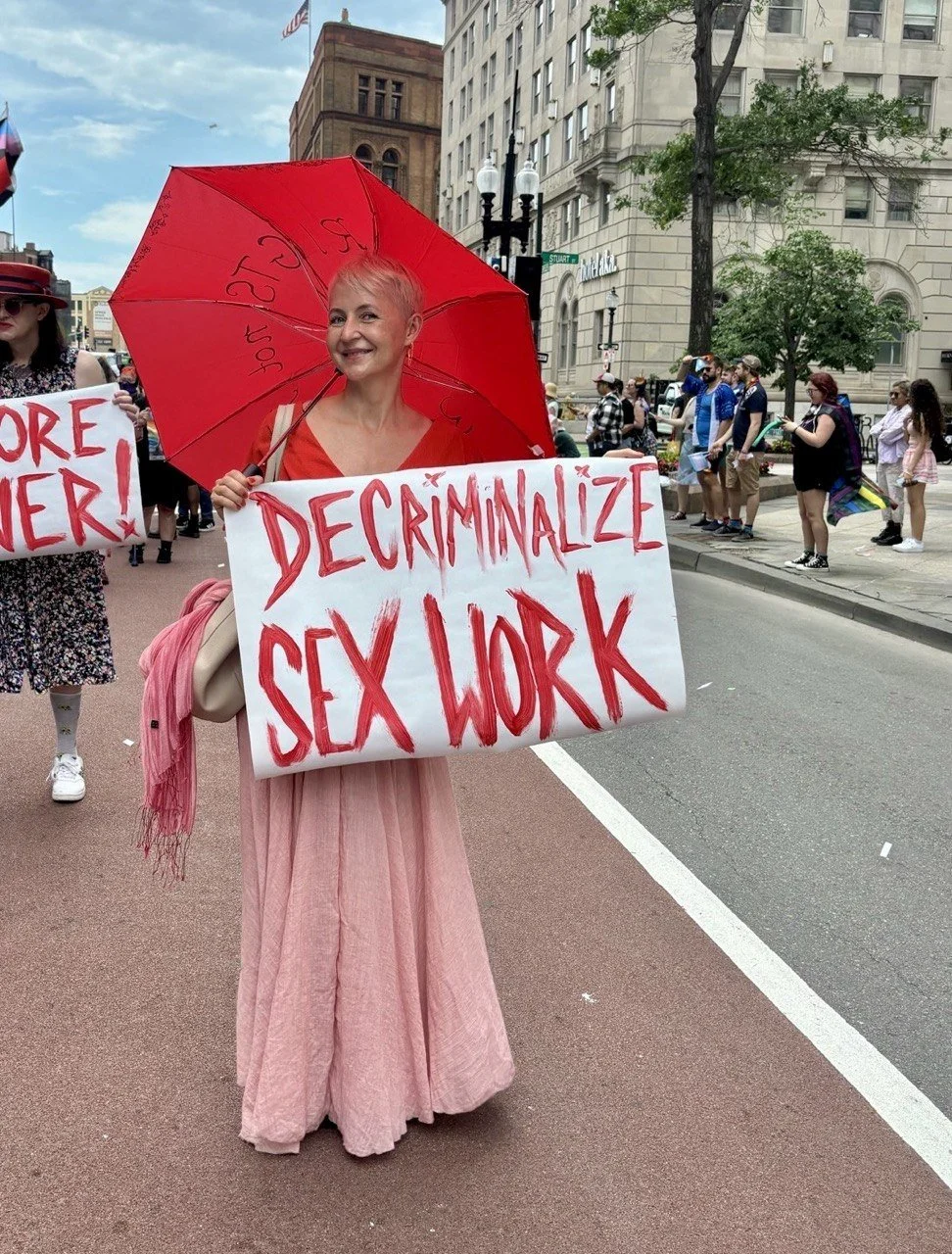
I’m a member of the Boston Sex Workers and Allies Collective (BSWAC), an organization that advocates for the full decriminalization of consensual adult sex work, including both workers and their clients.
I participate in parades and marches, and I submitted written testimony in support of the Cambridge City Council policy order passed on October 5, 2026. The order supports treating arrests for consensual adult sex work as a low law enforcement priority and calls on the district attorney to stop prosecuting it. It does not amount to full decriminalization, but it is a meaningful step toward protecting sex workers.
My involvement comes from how I feel about my own profession and the rights of the people working alongside me.
I chose this profession
Once, a client told me that I could still find a job in marketing.
What interested me about his comment was the assumption behind it. Why did he think returning to marketing was something I wanted? Why did he assume I would prefer another profession to the one I have now?
It can be difficult for some people to accept that someone could consciously choose sex work when other, more socially acceptable options are available.
I have a master’s degree and experience in other fields. I chose professional domination, and I take it seriously. It is my full-time work. When I file my taxes, I describe my occupation as a professional dominatrix. I don’t see this as something I’m doing between jobs or until I find a different career. I want to keep developing my skills and building my business.
Other people approach sex work differently. Some do it occasionally, some use it to support themselves through school, and some leave when their circumstances change. They deserve the same respect and protections. For me, this is the profession I have chosen to build my life around.
I respect the work we do
Some clients have told me that they see me as their psychotherapist. I am not a therapist, and I don’t have professional training in mental health. But I understand something of what they mean.
For some people, a session is an opportunity to speak about desires they have kept hidden for years. They can feel accepted without having to apologize for what interests them. That experience can mean a great deal to someone.
This is one reason I value my work. I see the trust involved, the attention it requires, and what clients tell me they get from it.
I also respect colleagues whose work differs from mine, including adult content creators and full-service sex workers. I want all of us to be able to work safely and have access to protection when someone harms us.
Criminalization can make people more vulnerable to exploitation
I care about trafficking and exploitation. That is one of the reasons I support decriminalizing consensual adult sex work.
When someone is afraid that contacting the police could lead to their own arrest, reporting threats, theft, or violence becomes more difficult. A person who wants to exploit them can use that fear against them. Criminalization can give abusers another way to maintain control.
Amnesty International’s research has documented how the threat of punishment can prevent sex workers from seeking police protection and reporting abuse. Criminalizing clients can also affect the conditions in which workers negotiate appointments and assess safety. Those consequences deserve attention when laws are presented as protecting us.
Decriminalizing consensual adult sex work would not mean accepting coercion, trafficking, or violence. Those acts should remain crimes. I want people experiencing them to be able to seek help without fearing punishment for their consensual work.
People deserve to support themselves and their families
Living in Boston is expensive. Rent, groceries, and other necessities take up a large part of many people’s income.
Finding another job is not always simple, especially when someone has health problems or responsibilities caring for children or a parent. As someone who cares for my mother, I know how much caregiving can shape the hours a person has available to work.
Sex work can offer some people a way to earn money within those constraints. That does not mean it is easy or suitable for everyone. It means that people’s circumstances differ, and the options available to them differ too. Someone who enjoys this work deserves rights. So does someone who does it primarily to pay the rent. Neither should have to prove that their reasons are good enough before they are entitled to safety.
Why I participate
Being part of BSWAC gives me a way to contribute to decisions that affect our lives. Marching and submitting testimony are ways I can make my experience part of a conversation that too often happens without the people doing this work.
The Cambridge vote was the result of a collective effort by workers, advocates, and allies. I am glad I contributed, even though there is more work ahead.
My decision to speak publicly about my profession is my own. I respect that clients and other workers may need privacy, and my advocacy does not change my commitment to their confidentiality.
I would welcome more people becoming involved in whatever way is possible for them. Not everyone can march publicly or attach their name to testimony. Supporting an organization or contributing privately can matter too.
I advocate because I want a say in the conditions under which I work, and I want my colleagues to have that same opportunity. We should be able to earn a living, report harm, and ask for help without being treated as people who deserve what happens to us.
Mistress Jane is a professional dominatrix based in Boston who specializes in psychological domination, role-play, and power exchange. If you're curious about exploring kink in a safe and supportive environment, you can learn more about sessions here.
